Lesson 8: Scripts, Captions, and Visual Hooks
Lesson 8: Scripts, Captions, and Visual Hooks
By now you know how to:
• analyze ads
• film usable footage
• control lighting
• edit for attention
But here is the truth most creators don’t realize: a perfectly filmed and edited video can still fail Why? Because the MESSAGE is weak
This lesson is where content becomes: marketing, persuasion, conversion
You will learn:
• how to create hooks that actually work
• how to structure scripts that sell
• how to use words that build trust
• how to combine visuals + message.
This is the part that changes your results
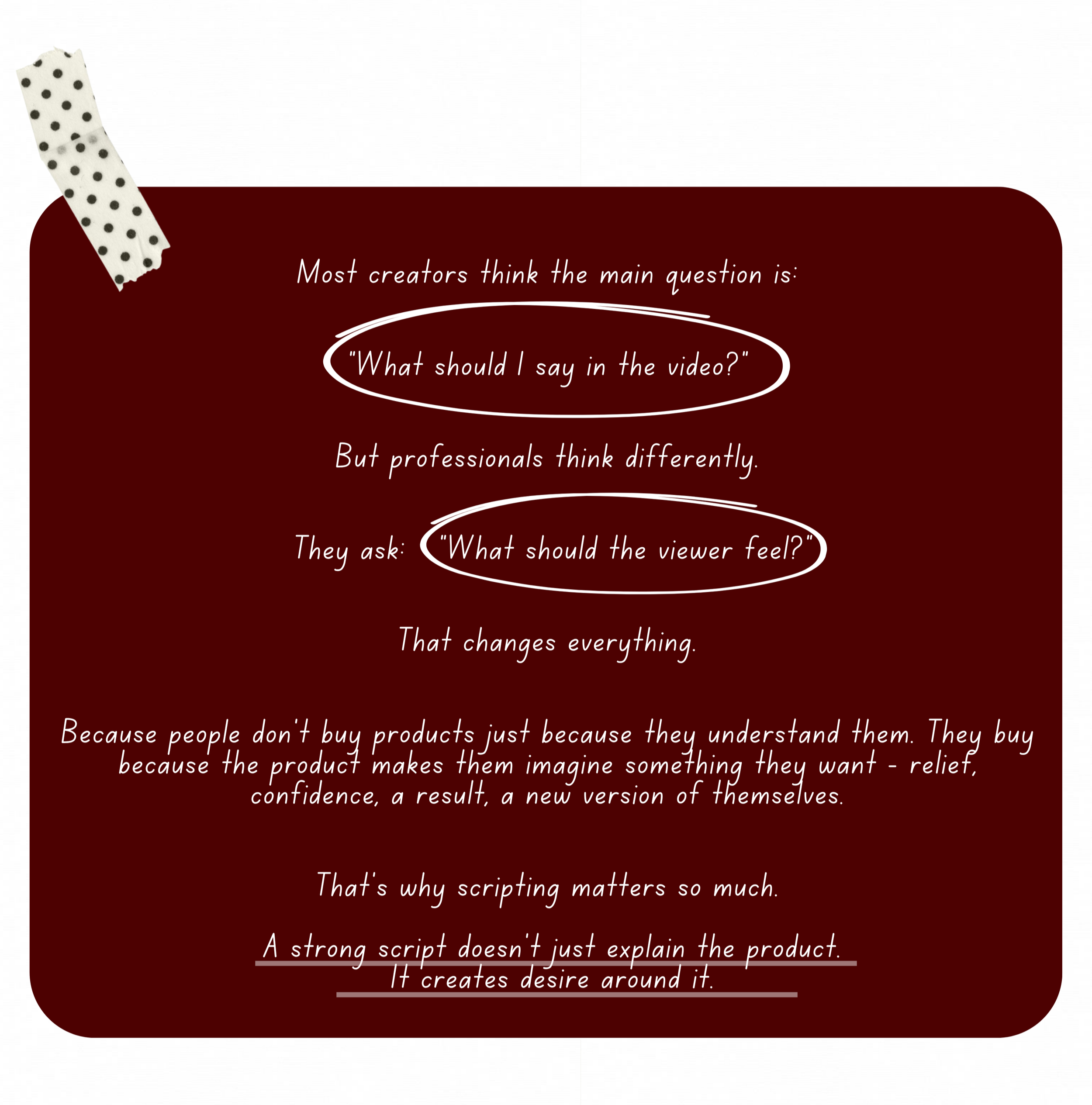
What a Hook Actually Does
A hook is not just your first sentence. A hook is the moment that makes the brain pause.
It creates that tiny reaction: “Wait… what?”
Weak hooks usually describe or introduce. They say what the product is, but they don’t create tension.
Strong hooks do something else. They interrupt, create curiosity, or suggest a result.
For example:
“This is a hydrating serum”
“My skin stopped feeling dry after this”
That’s the difference between description and transformation. And transformation is what makes people keep watching.
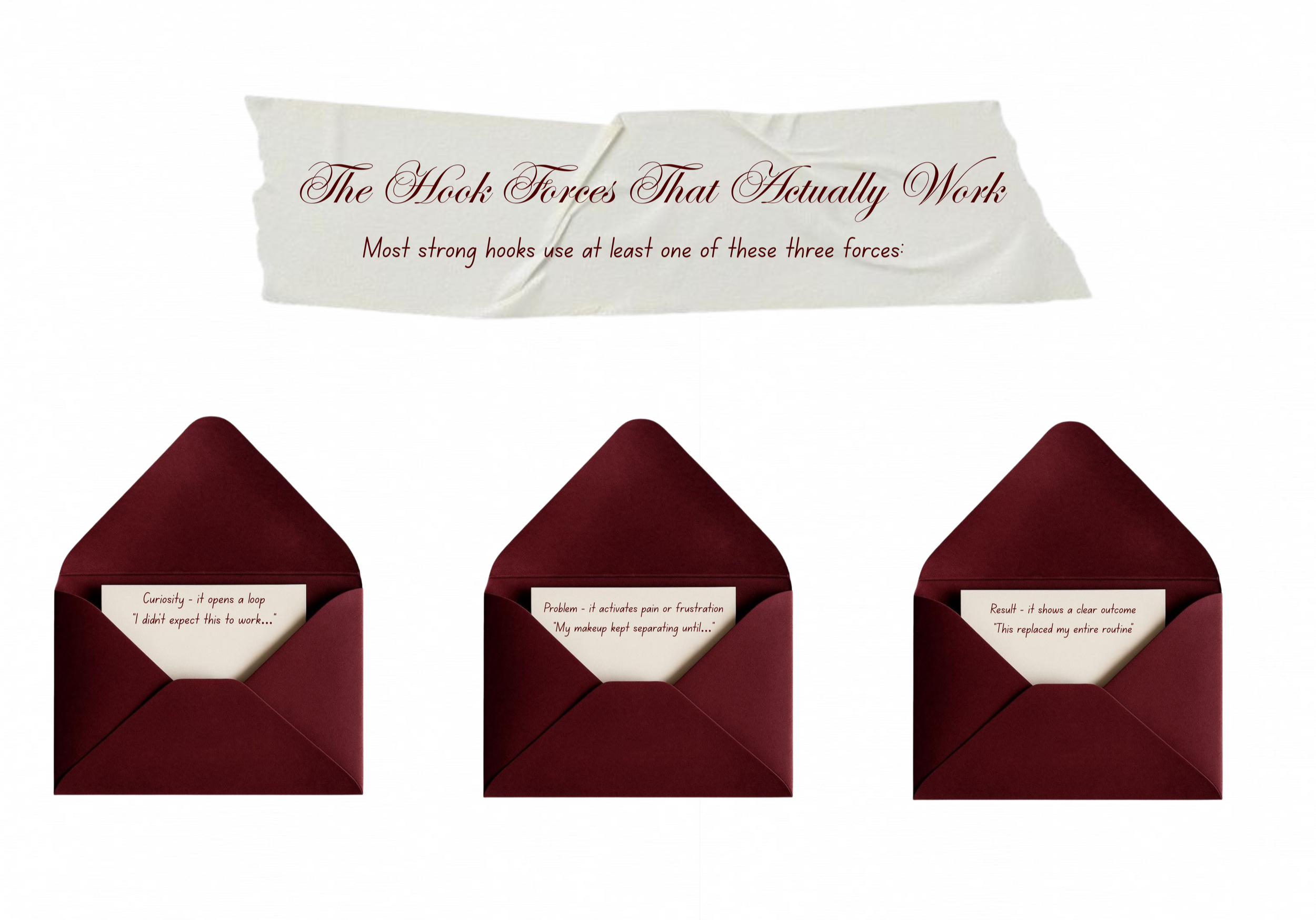
The strongest hooks usually combine two or three of these at once.
For example: “I didn’t expect this to fix my dry skin this fast”
That works because it creates curiosity, names a problem and promises a result - all at once.
Not every hook fits every product, though.
Problem hooks work especially well for skincare and pain-point products. Curiosity works for viral or new products. Comparison works when the product competes with something familiar. Discovery works well for aesthetic or lifestyle content.
The right hook doesn’t just sound good.
It fits the product.
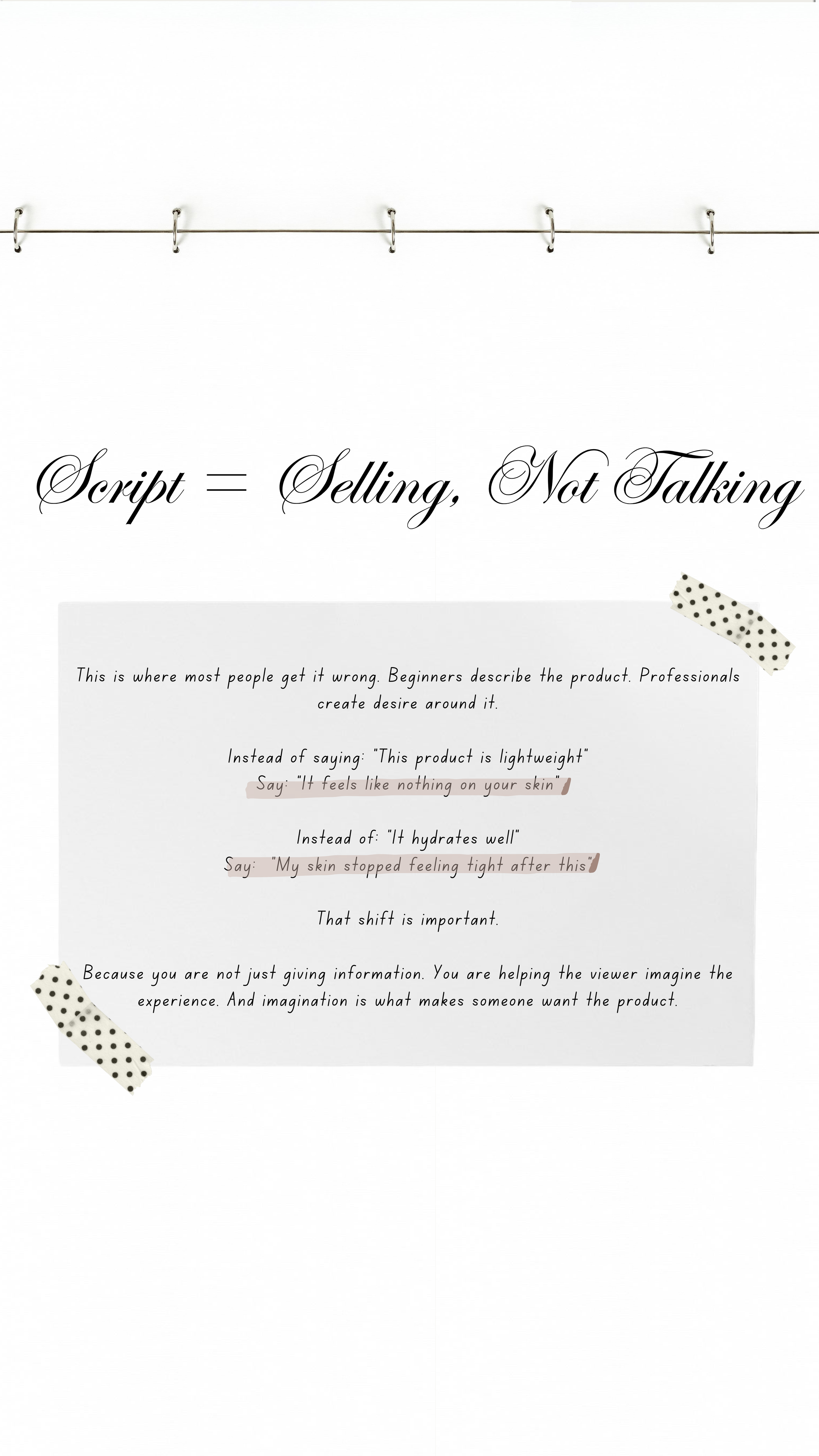
The Simple Script Structure That Still Converts
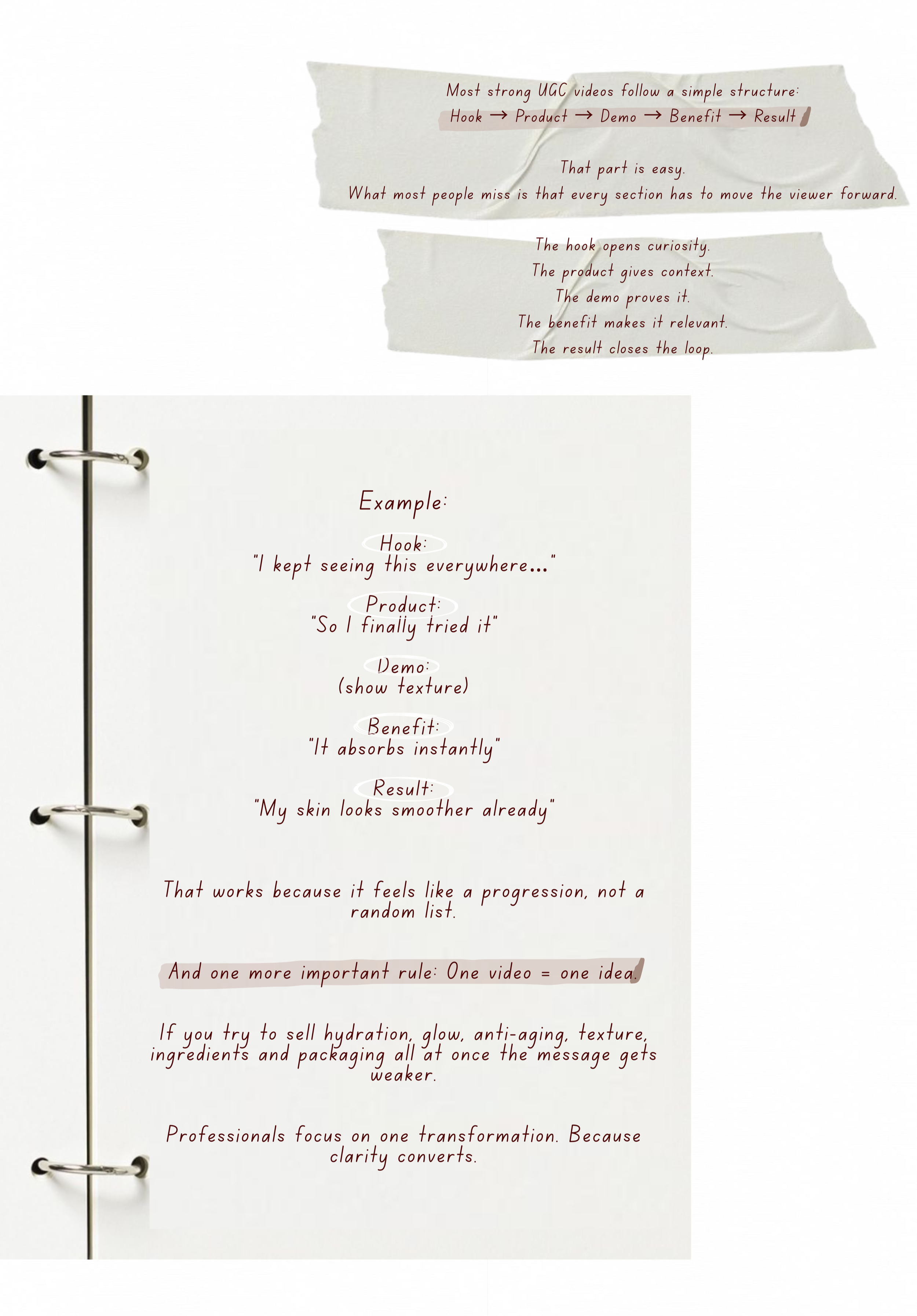
The Words That Build Trust
A lot of people ruin good videos with bad wording.
Phrases like:
• “best product ever”
• “amazing quality”
• “I love this”
usually feel vague, overused and too ad-like. They don’t sound believable. Words that build trust are softer and more natural:
• “I didn’t expect…”
• “I noticed…”
• “after using this…”
These feel more honest because they sound like observation, not performance. Trust is built through language that feels real. And trust is what makes someone believe the result might work for them too.
Not every hook needs to be spoken. Sometimes the visual itself is what stops the scroll.
That could be:
• opening the packaging
• applying the product instantly
• showing a before/after difference
• a texture close-up
A visual hook gets attention fast. Words then hold that attention and give it meaning. The strongest videos use both. And when visuals and script match, the content feels much more professional.
Good captions do three things:
• guide
• support
• simplify
Keep them short. Usually 3–5 words is enough.
Examples:
• “No greasy feel”
• “Hydrates instantly”
Text is not decoration. It’s control.
It helps shape how the message is received.
Why Good Videos Still Don’t Convert
A video can be aesthetic, clean, and well edited and still fail. Because pretty is not the same as effective.
Good videos still fail when:
• the message is unclear
• too many ideas compete at once
• the hook is weak
• there’s no emotional trigger
That’s why scripting matters so much. Words don’t just explain. Words create perception. And perception decides whether someone scrolls, stays or buys.
So the real goal here is not to “say something nice about the product.” It’s to make the viewer want it. Because when your script feels real, clear, and emotionally relevant, brands stop seeing your content as “just a video.”
They see value and that’s what they pay for.
What Comes Next
Now you know how to:
structure message
build hooks
create desire
Next: Your Proof Stack
Where we turn your skills into:
something brands can trust
something that gets you paid