
Lesson 7: Editing That Captures Attention
Lesson 7: Editing That Captures Attention

By now you already know how to:
• analyze successful ads
• film usable footage
• control lighting and location
• capture strong product shots
Now we move to the stage where content either: performs or dies
The Real Role of Editing
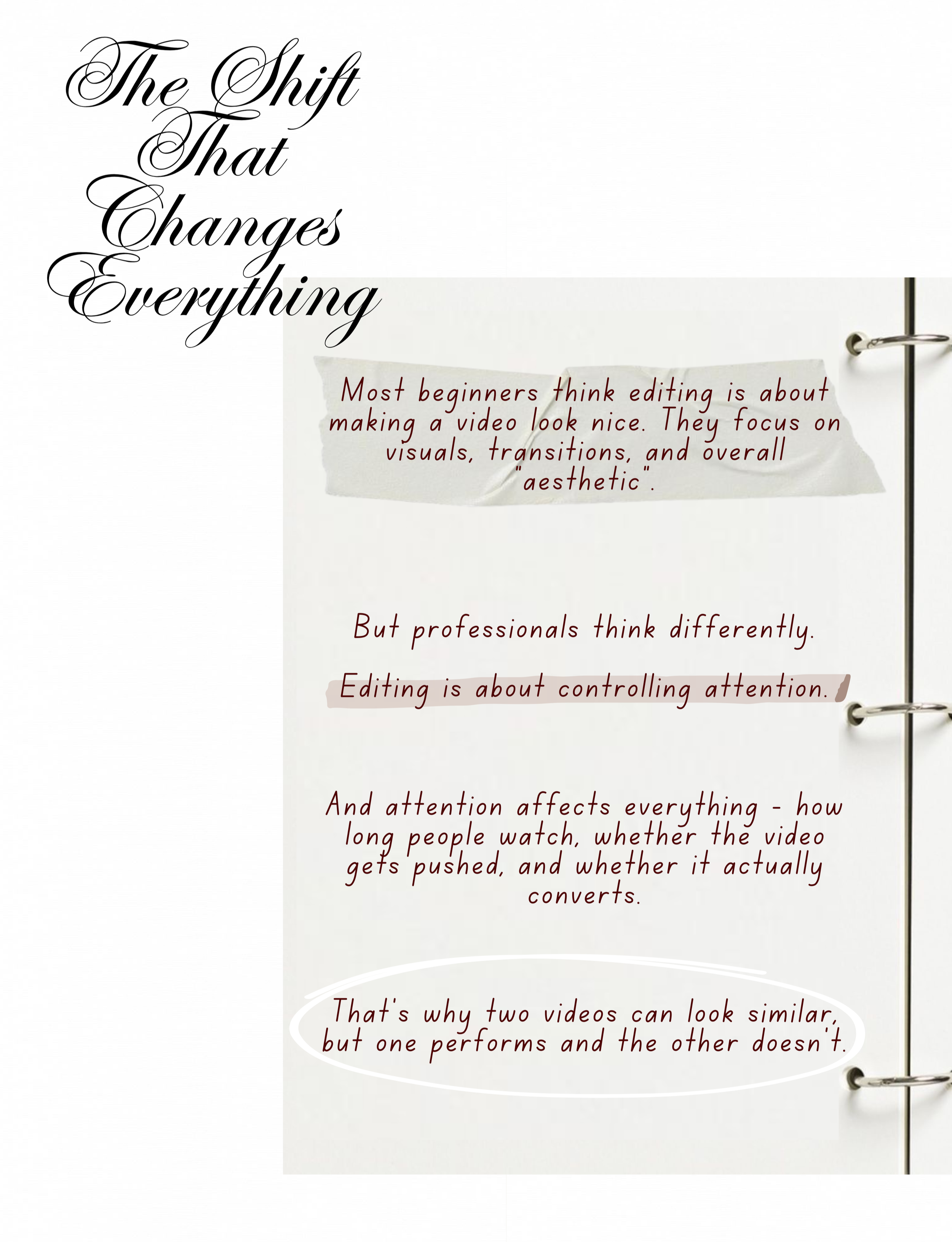
Editing decides if your video works or disappears.
If people don’t watch, your video doesn’t get shown.
And if it doesn’t get shown - it doesn’t sell.
This is why editing is not just creative work.
It’s performance work.
You’re not just editing clips - you’re controlling how the viewer experiences the video from start to finish.
The First Seconds (Make or Break)
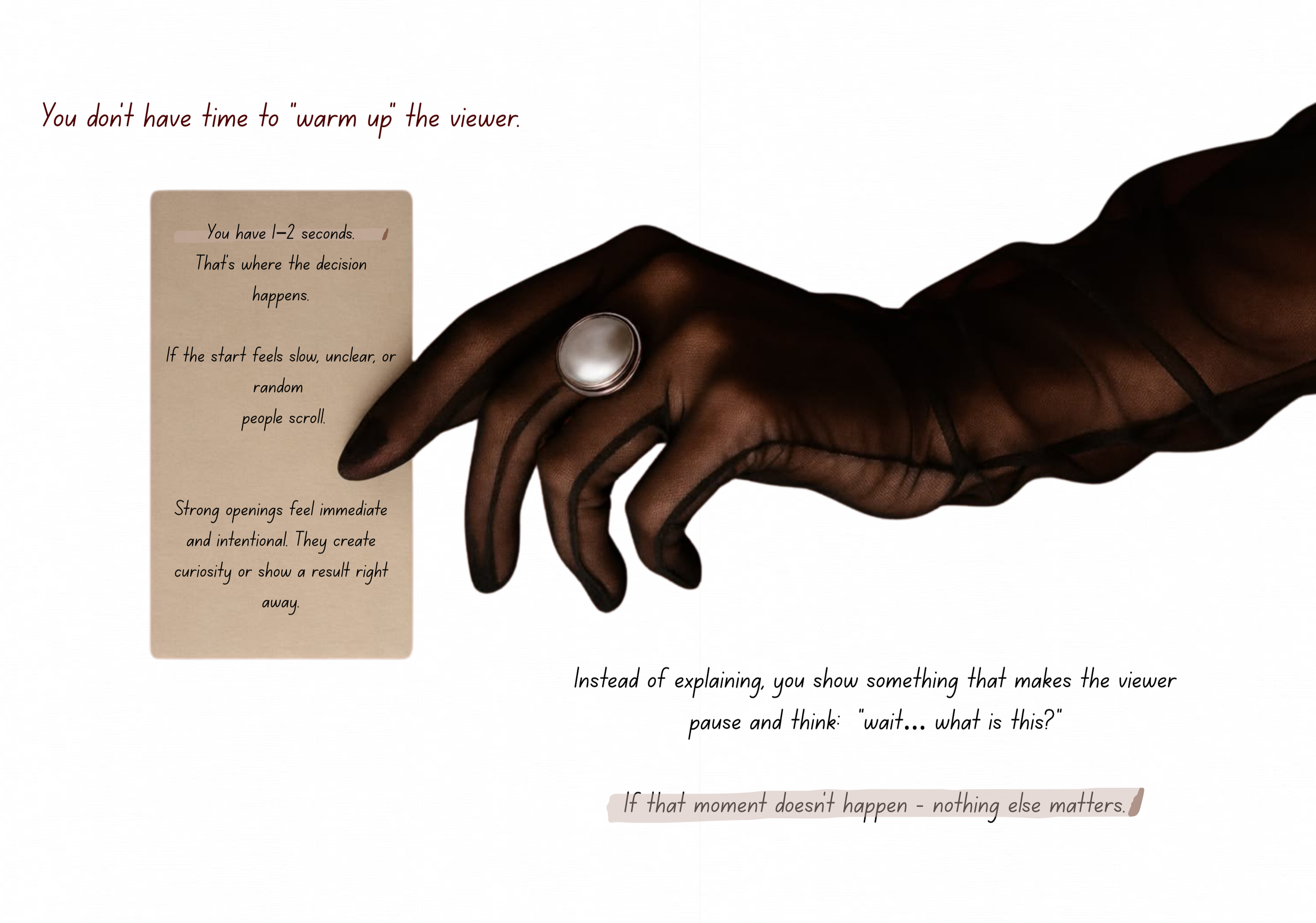
Most high-performing UGC follows a simple structure, not because it’s trendy, but because it works:
Hook → Product → Demonstration → Result
You stop the scroll, show what the product is, demonstrate how it works, and then show why it matters.
One important detail many miss: show the product early.
If the viewer doesn’t understand what they’re watching quickly, they won’t stay to figure it out.
Clarity is what keeps people watching.

Pacing and Pattern Interrupts
Most videos lose attention because nothing changes. The same shot stays on screen too long, and the brain gets bored. To keep attention, something should change every 1–2 seconds.
This could be:
• angle
• movement
• zoom
• framing
This is called a pattern interrupt. It keeps the video feeling alive. Pacing is just as important. Most clips should be short - around 1–3 seconds.
But the real rule is: Cut before it feels slow, not after.
Good pacing feels smooth and natural, but never static.
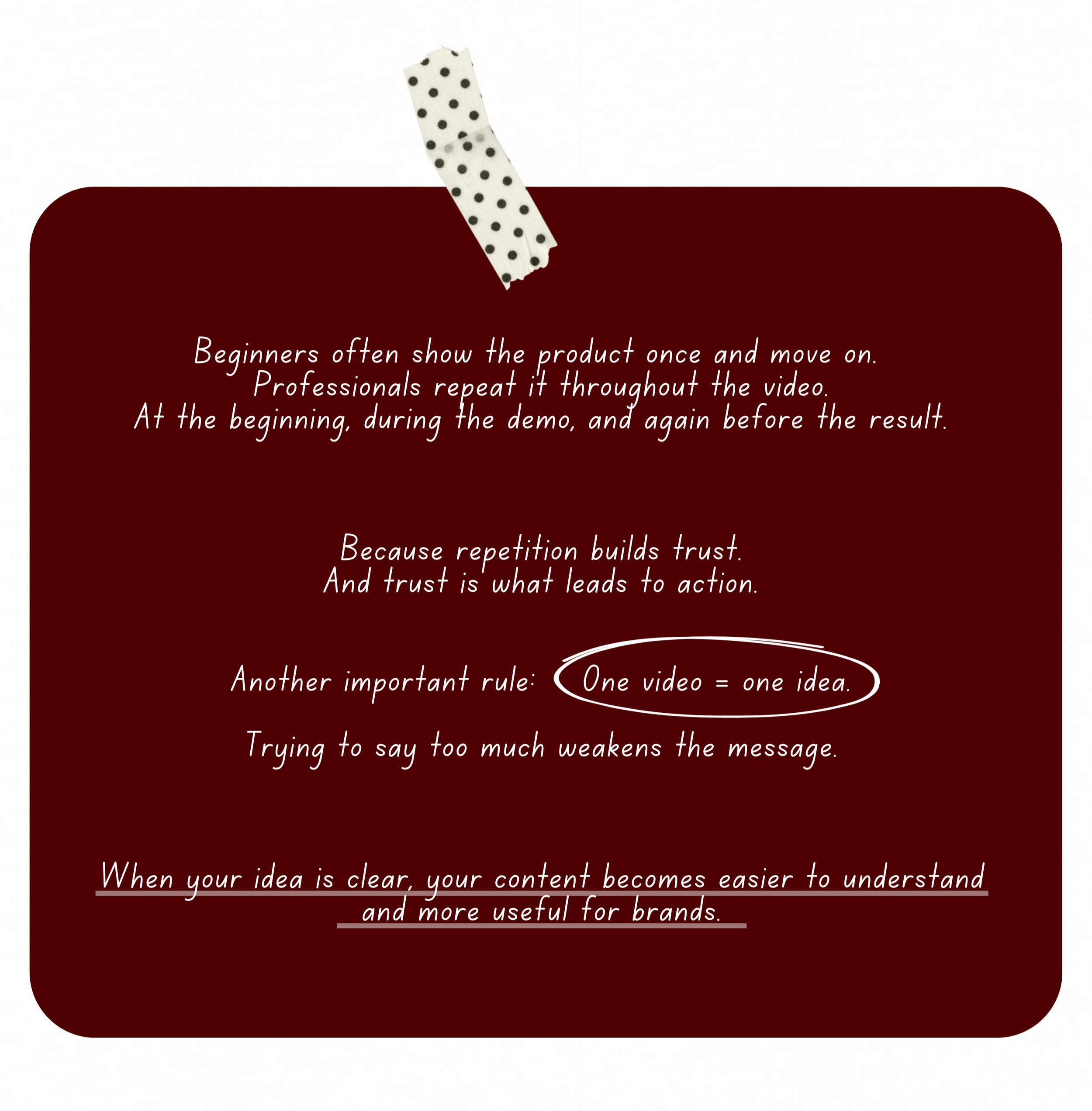
Visibility, Repetition and Clarity
Details That Make Content Feel Expensive
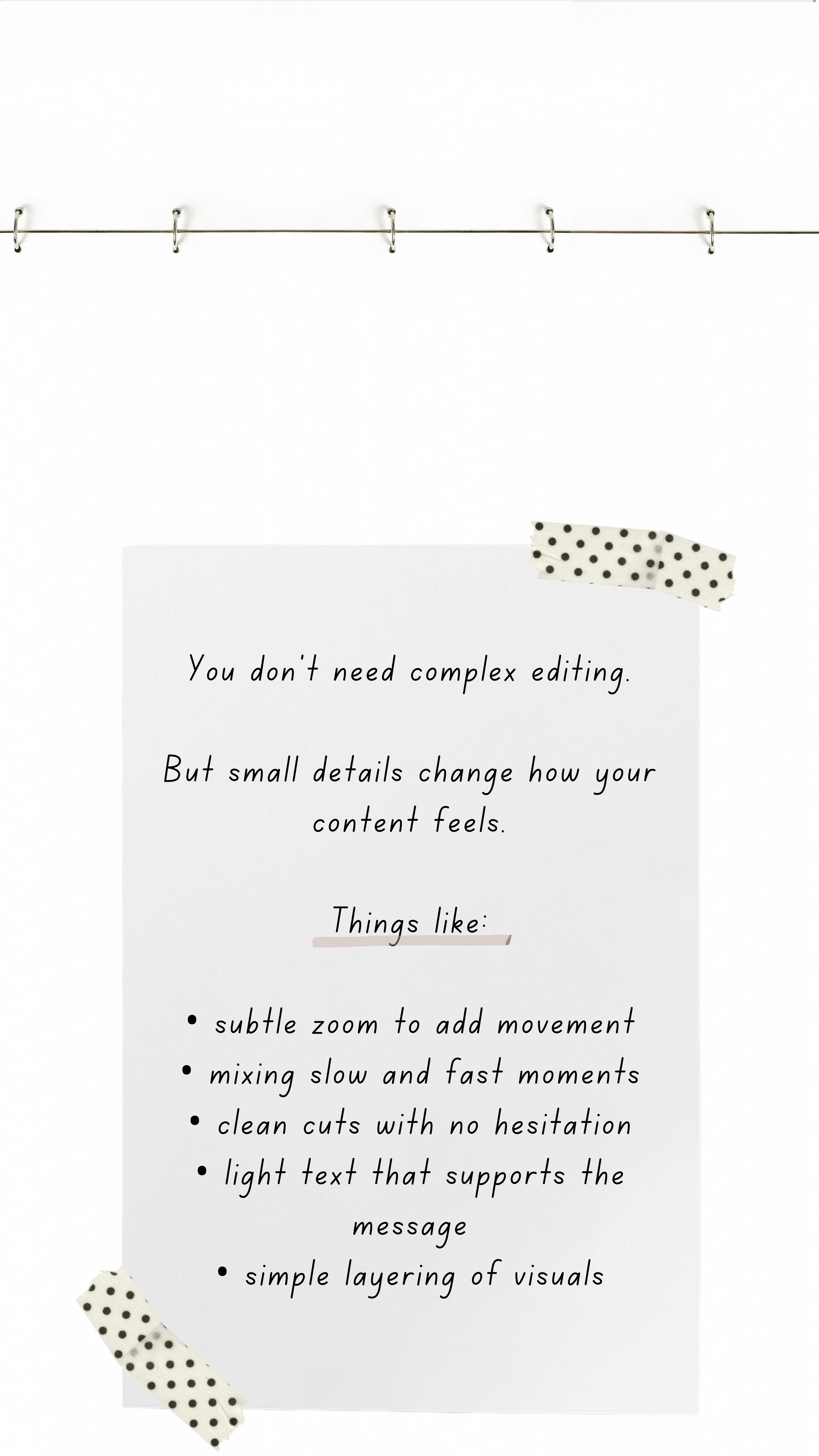
These are small, but they affect perception. Speed also plays a role. Slower moments create emotion and a premium feel. Faster cuts add energy and keep attention. The contrast between them keeps the viewer engaged.
Why Most Videos Fail (And What Actually Works)
A video can look aesthetic, clean, and well-shot and still not work. Because it doesn’t perform.
Common issues:
• product appears too late
• no clear structure
• weak hook
• slow pacing
• no repetition
Brands don’t need pretty videos. They need videos that hold attention and clearly show value. The difference is simple:
Beginners edit based on how the video looks.
Professionals edit based on how it performs.
What Comes Next
Now you know how to turn footage into content that holds attention.
Next: Scripts, Captions, and Visual Hooks
Where we build:
what you say
how you say it
why people believe it